Expedited freight for manufacturing plants: keeping production lines running

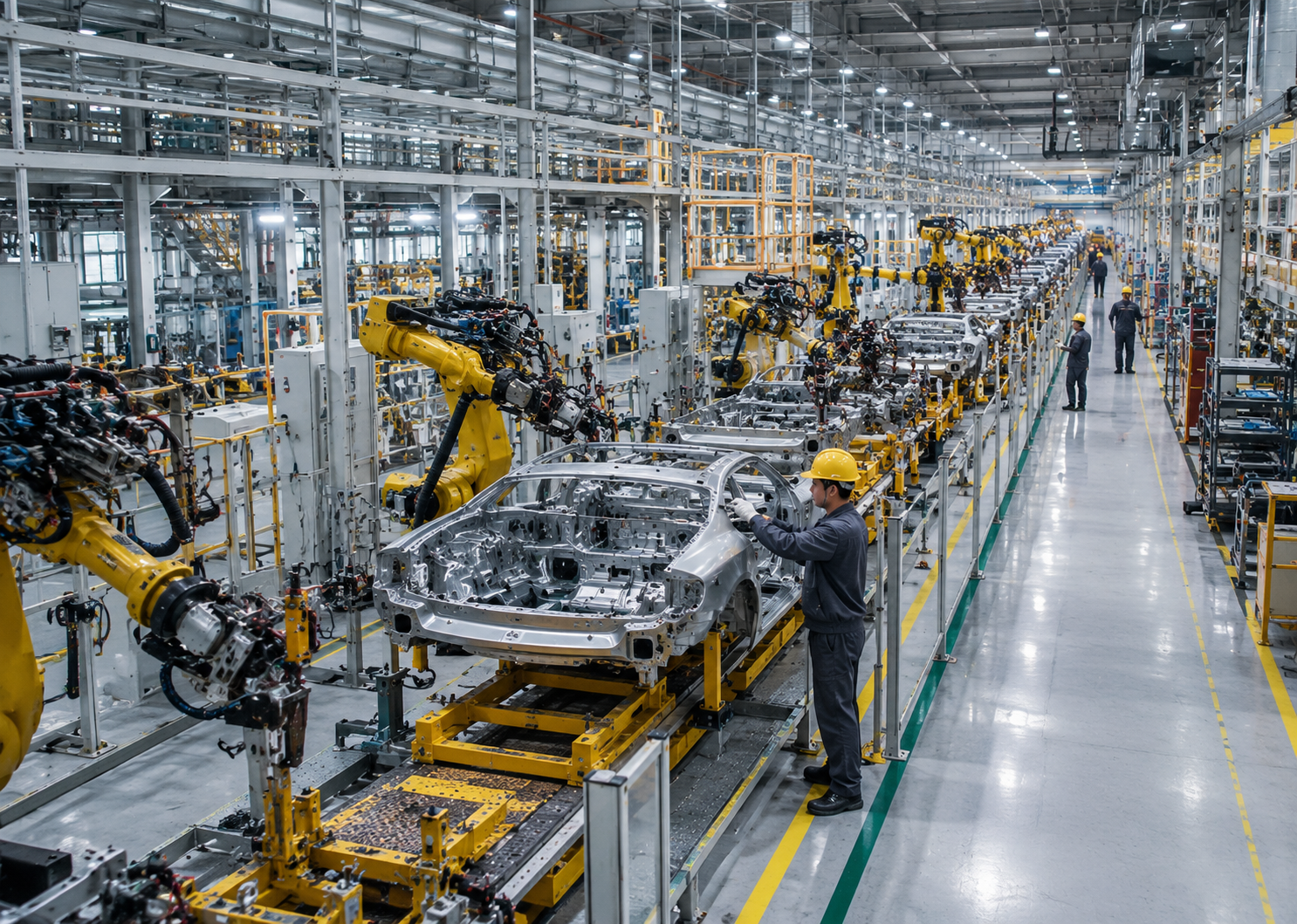
A production line shutdown is one of the most expensive situations a manufacturing plant can face. Depending on the facility and product, a single hour of downtime can cost anywhere from a few thousand to several hundred thousand dollars in lost output, delayed orders, and labour costs. When the cause is a missing or failed component - a part that is sitting in a warehouse 800 miles away, or that needs to be sourced and shipped within hours - the speed and reliability of the freight broker you call in that moment determines how quickly the line starts again.
This is the core use case for expedited freight in manufacturing. It is not the only one, but it is the one where the stakes are highest and where the choice of logistics partner matters most. Here is how expedited freight for manufacturing actually works, what the common scenarios look like, and what to look for in a broker before you need one.
The manufacturing scenarios that generate an expedited freight call
Most manufacturing plants run on scheduled, planned freight - bulk raw materials arriving on standard schedules, finished goods leaving on outbound routes. Expedited freight enters the picture when something breaks the plan:
- Production line down (line-down): A critical machine component fails. The replacement part is not in local inventory and needs to be sourced from a supplier, warehouse, or distributor and delivered as fast as physically possible. Every hour the line is down is a direct financial loss. This is the scenario where expedited freight earns its premium without question.
- Supply chain disruption: A scheduled inbound shipment is delayed or lost. Without the material or component, production cannot continue. An expedited freight broker can source an alternative carrier, re-route the shipment, or find an alternative supplier faster than the plant's procurement team can working alone.
- Just-in-time inventory failure: JIT manufacturing operates with minimal buffer stock by design. When a supplier misses a delivery window - even by a few hours - the downstream effect on production can be immediate. Expedited freight fills the gap while the scheduled supplier situation is resolved.
- Urgent outbound delivery: A customer has a contractual delivery deadline with penalty clauses. A production delay has compressed the outbound window to the point where standard freight will not make the deadline. Expedited ground or air freight is the only way to meet the commitment.
- Tool and die emergency: Specialist tooling, moulds, or dies fail or need emergency replacement. These are often custom components with a single or limited source, requiring fast pickup from a supplier and direct delivery to the plant.
- Quality hold release: A batch of materials or components is held for quality inspection and cleared late. The production schedule cannot wait for standard freight to move the released material.
"The difference between a two-hour solution and an eight-hour solution in a line-down situation is almost always the freight broker's carrier network and their ability to dispatch immediately. That gap in response time is the real cost of choosing the wrong partner."
How expedited freight brokers handle manufacturing emergencies differently
A licensed freight broker in an expedited manufacturing situation is not simply finding a carrier and booking a load. The value they add - particularly in a line-down emergency - involves several capabilities that standard freight arrangements do not provide:
Immediate carrier dispatch
An expedited broker with an active carrier network can have a vehicle dispatched within minutes of a call - not hours. The difference between a broker who maintains live relationships with dedicated and hot-shot carriers and one who simply posts loads to a load board is the difference between a 30-minute dispatch and a 3-hour wait while carriers bid.
Mode selection for manufacturing freight
The right mode for a manufacturing emergency depends on distance, deadline, and cargo type:
- Dedicated ground - van or straight truck: For distances under 500-600 miles, a dedicated ground vehicle dispatched immediately is typically faster door-to-door than air once airport handling time is factored in. No loading dock wait, no airport check-in window, no destination pickup delay. Direct from supplier to plant.
- Hot shot: For smaller, urgent loads - a single pallet or a few boxes of components - a hot shot truck (typically a pickup truck with a flatbed or enclosed trailer) can be dispatched with zero load consolidation delay and cover regional distances quickly.
- Next flight out (NFO): For distances over 700-800 miles where the delivery window is under 12 hours, NFO air freight is usually the only viable option. The component travels as cargo on the next available commercial flight and is collected by a courier at the destination airport for immediate delivery. See our next flight out guide for full detail on how NFO works.
- Expedited LTL: For larger loads that cannot fill a full vehicle but need to move faster than standard LTL schedules, some carriers offer expedited LTL service with guaranteed transit times. This is appropriate when the urgency is high but not at the level of a true line-down emergency.
What manufacturing plants should have ready before calling a broker
In a line-down situation, every minute spent gathering information is a minute the line stays down. Having the following information ready before calling your expedited freight broker will cut the time to dispatch significantly:
- Exact pickup address (including any access restrictions, dock requirements, or security check-in procedures)
- Exact delivery address at the plant (which dock, which entrance, who to call on arrival)
- Weight and dimensions of the shipment
- Any handling requirements (fragile, hazmat classification, temperature, special equipment needed)
- Hard deadline - not "as soon as possible" but an actual time the line needs the part
- Whether the material is available for immediate pickup or if there is a preparation window
Choosing an expedited freight broker for manufacturing before you need one
The worst time to evaluate a freight broker is during an emergency. By the time your line is down, there is no time to vet carriers, check references, or compare rates. The manufacturing plants that handle line-down situations most effectively are the ones that have an established relationship with a trusted expedited broker before a crisis occurs.
The questions worth asking when establishing that relationship include:
- What is your average time from call to dispatch for a line-down emergency?
- Do you have 24/7 live dispatch - can I reach a person at 2am on a Sunday?
- What is your carrier network coverage for the regions where our suppliers are located?
- Do you handle hazmat, oversized, or temperature-sensitive freight if our components require it?
- What documentation do you provide - proof of pickup, real-time tracking, proof of delivery?
KLAM Expeditors - expedited freight for manufacturing
KLAM Expeditors is a licensed freight broker (MC# 1664023) with 24/7 live dispatch for manufacturing emergencies. We handle dedicated ground, hot shot, next flight out, and expedited LTL shipments for manufacturing plants across the United States. Our carrier network covers all 48 contiguous states with immediate dispatch capability for most origin points.
For line-down situations and other time-critical manufacturing freight needs, call us directly at +1 510 331 6699. For planned expedited freight requirements or to establish a standing relationship before you need it, visit our expedited ground service page or our next flight out service page, or contact us at any time.